



Close Menu
    What's Hot

    Child mental health forum to be held in Norristown

    May 13, 2024

    GameStop's stock prices surged when Roaring Kitty made a comeback on social media

    May 13, 2024

    Van Jones criticized possible Trump VP candidates for avoiding 2024 election questions, saying it's like failing kindergarten

    May 13, 2024
    Facebook X (Twitter) Instagram Telegram
    Facebook X (Twitter) Instagram
    The Plaza JournalThe Plaza Journal
    Subscribe
    Sunday, January 25
    • Sports
      • American Football
      • Basketball
      • Baseball
      • Boxing
      • Cricket
      • Football
      • Hockey
      • Tennis
    • Politics

      John Dean believes the hush money case against Trump is very strong

      May 13, 2024

      “Cruel and unfeeling” Trump assistant boasts about causing innocent homeless people to be arrested

      May 13, 2024

      Only 5 percent of people mention January 6th as the most important memory from Trump's presidency: Survey

      May 13, 2024

      7 in 10 say they’ve given a lot of thought to election: Gallup

      May 13, 2024

      Trump: ‘Hannibal Lecter is a wonderful man’

      May 13, 2024
    • Technology
    • United States
    • United Kingdom
    • Business
    • Entertainment
    • Science
      1. Archaeology
      2. Anthropology
      3. Space
      4. Biology
      5. Ecology
      6. Geology
      7. Nanotechnology
      8. Neurology
      9. Paleontology
      10. Psychology
      11. Mathematics
      12. Geography
      13. Astrophysics
      14. Oceanography
      15. Physics
      Featured

      How perspiration and endurance helped humans become excellent runners and hunters

      Biology May 13, 20244 Mins Read
      Recent

      How perspiration and endurance helped humans become excellent runners and hunters

      May 13, 2024

      Amazing photos of colorful skies around the world as auroras shine in bright colors

      May 11, 2024

      Scotland has suddenly seen a large increase in mosquitoes

      May 10, 2024
    • Health
    Facebook X (Twitter) Instagram
    The Plaza JournalThe Plaza Journal
    Home»Anthropology

    Complete Neanderthal genome sequenced

    By John ArcadipaneMay 9, 2010 Anthropology 4 Mins Read
    Share
    Facebook Twitter LinkedIn Pinterest Email

    Yes ladies and gents, researchers have produced the whole genome sequence of the 3 billion “letters” (nucleotides) in the Neanderthalian genome, and the results are interesting to say the least. For starters, up to 2 percent of present day human DNA outside of Africa originated in Neanderthals; this result suggests that the Neanderthals, Homo neanderthalensis diverged from the same primate line that led to nowadays humans, homo sapiens.
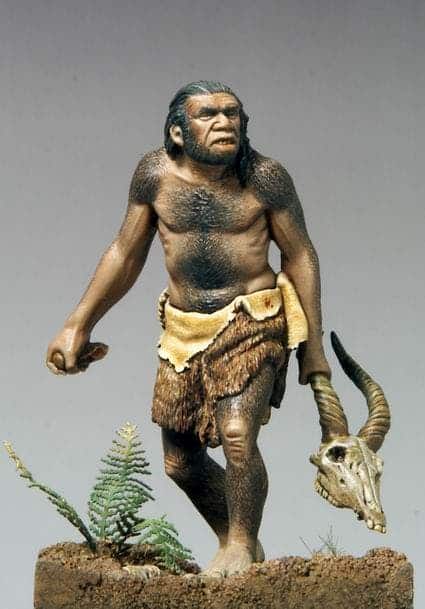
    neanderthal

    However, some 400.000 years ago, they migrated to northern Eurasia, where they became genetically isolated and evolved differently than the other human line. Approximately 30.000 years ago however, the Neanderthals dissappeared. Still, they are our closest relative, considering we share an ancestor from some 800.000 years ago. For example, the chimpanzees diverged from the same line 5-7 million years ago.

    “This sequencing project is a technological tour de force,” said NHGRI Director Eric D. Green, M.D., Ph.D. “You must appreciate that this international team has produced a draft sequence of a genome that existed 400 centuries ago. Their analysis shows the power of comparative genomics and brings new insights to our understanding of human evolution.”

    In order to achieve their goals, researchers analyzed DNA from three females that lived some 40.000 years ago (pretty close to the extinction date). This provided the first “genome-wide look” at the similarities and unsimilarities between humans and our “relative”. They results showed that Neanderthal DNA is 99.7% identical to our own, and 98.8% identical to that of the chimpanzee (the same number is correct for human-chimp DNA comparison).

    “The genomic calculations showed good correlation with the fossil record,” said coauthor Jim Mullikin, Ph.D., an NHGRI computational geneticist and acting director of the NIH Intramural Sequencing Center. “According to our results, the ancestors of Neanderthals and modern humans went their separate ways about 400,000 years ago.”

    “It was a very unique series of events, with a founding population of modern humans of greatly reduced size — tens to hundreds of individuals,” Dr. Mullikin said.

    They know this because geneticists can detect if the population constricts, identifying several genetic markers that are ore cnocentrated.

    ”

    At that time,” Dr. Mullikin continued, “where the population was greatly reduced, the modern humans migrating out of Africa encountered Neanderthals and inter-breeding occurred between the two groups, leaving an additional, but subtle, genetic signature in the out-of-Africa group of modern humans.”

    As homo sapiens spread across Europe and not only, they carried with them Neanderthal DNA – and spread it. So it’s no surprise then that 2 percent of the genomes of present-day humans living from Europe to Asia was inherited from them. The team however, did not find those traces of DNA in people in Africa.

    “The data suggests that the genes flowed from Neanderthal to modern humans,” Dr. Mullikin said. “That had to have occurred at least once during the 20,000 to 30,000 years, in which modern humans and Neanderthal both lived on the Eurasian continent.”

    However, the team said they need more samples in order to improve and expand their results.

    “These are preliminary data based on a very limited number of samples, so it is not clear how widely applicable these findings are to all populations,” said Vence L. Bonham, Jr., J.D., senior advisor to the NHGRI Director on Societal Implications of Genomics. “The findings do not change our basic understanding that humans originated in Africa and dispersed around the world in a migration out of that continent.”

    UPDATE: Researchers at the Max Plank Institute in Leipzig, Germany have recently released (2013) a high-detail genome of a Neanderthal specimen for open access. This will hopefully advance our understanding of Neanderthals and how they relate to modern man.

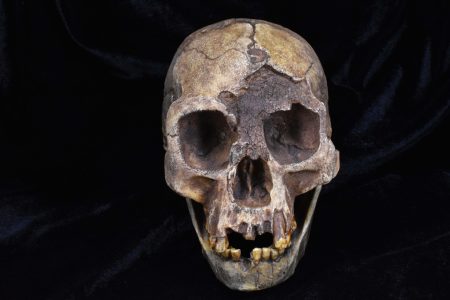
    Dna Genome Human Neanderthal Neanderthalian Research Science Sequence Study
    John Arcadipane

    Keep Reading

    Our special lineage: The evolution of humans has gone in the opposite direction compared to other animals with backbones

    Is this peculiar small rock the oldest known animal carving?

    Our early human ancestors began leaving Africa in large numbers after almost dying out around one million years ago

    Extreme weather from past decade linked to global warming

    Add A Comment
    Leave A Reply Cancel Reply

    Must Read
    Latest Posts

    Child mental health forum to be held in Norristown

    May 13, 2024

    GameStop's stock prices surged when Roaring Kitty made a comeback on social media

    May 13, 2024

    Van Jones criticized possible Trump VP candidates for avoiding 2024 election questions, saying it's like failing kindergarten

    May 13, 2024

    Chicken fat supercapacitors may be able to store future green energy

    May 13, 2024

    Most students at prestigious universities believe that there is an issue with antisemitism, as per a survey conducted by U.S. News & World Report

    May 13, 2024
    The Plaza Journal White Logo
    X-twitter Facebook Google Pinterest Telegram

    News

    • World
    • US Politics
    • EU Politics
    • Business
    • Opinions
    • Connections
    • Science

    Company

    • Information
    • Advertising
    • Classified Ads
    • Contact Info
    • Do Not Sell Data
    • GDPR Policy
    • Media Kits

    The Plaza Journal

    • Contact Us
    • Subscription
    • Submit an Anonymous Tip
    • Newsletters
    • Sponsored News
    • Advertise With Us
    • Privacy Notice

    Keep updated

    Get the latest creative news from FooBar about art, design and business.

    Copyright © 2026 The Plaza Journal. All rights reserved.
    • Privacy Policy
    • Terms of Use
    • Cookie Policy
    • Accessibility

    Type above and press Enter to search. Press Esc to cancel.