




Close Menu
    What's Hot

    Child mental health forum to be held in Norristown

    May 13, 2024

    GameStop's stock prices surged when Roaring Kitty made a comeback on social media

    May 13, 2024

    Van Jones criticized possible Trump VP candidates for avoiding 2024 election questions, saying it's like failing kindergarten

    May 13, 2024
    Facebook X (Twitter) Instagram Telegram
    Facebook X (Twitter) Instagram
    The Plaza JournalThe Plaza Journal
    Subscribe
    Thursday, October 29
    • Sports
      • American Football
      • Basketball
      • Baseball
      • Boxing
      • Cricket
      • Football
      • Hockey
      • Tennis
    • Politics

      John Dean believes the hush money case against Trump is very strong

      May 13, 2024

      “Cruel and unfeeling” Trump assistant boasts about causing innocent homeless people to be arrested

      May 13, 2024

      Only 5 percent of people mention January 6th as the most important memory from Trump's presidency: Survey

      May 13, 2024

      7 in 10 say they’ve given a lot of thought to election: Gallup

      May 13, 2024

      Trump: ‘Hannibal Lecter is a wonderful man’

      May 13, 2024
    • Technology
    • United States
    • United Kingdom
    • Business
    • Entertainment
    • Science
      1. Archaeology
      2. Anthropology
      3. Space
      4. Biology
      5. Ecology
      6. Geology
      7. Nanotechnology
      8. Neurology
      9. Paleontology
      10. Psychology
      11. Mathematics
      12. Geography
      13. Astrophysics
      14. Oceanography
      15. Physics
      Featured

      How perspiration and endurance helped humans become excellent runners and hunters

      Biology May 13, 20244 Mins Read
      Recent

      How perspiration and endurance helped humans become excellent runners and hunters

      May 13, 2024

      Amazing photos of colorful skies around the world as auroras shine in bright colors

      May 11, 2024

      Scotland has suddenly seen a large increase in mosquitoes

      May 10, 2024
    • Health
    Facebook X (Twitter) Instagram
    The Plaza JournalThe Plaza Journal
    Home»News

    NASA discovers strange islands on a lava lake on Jupiter’s moon Io

    By Antoine SánchezApril 20, 2024 News 4 Mins Read
    Share
    Facebook Twitter LinkedIn Pinterest Email
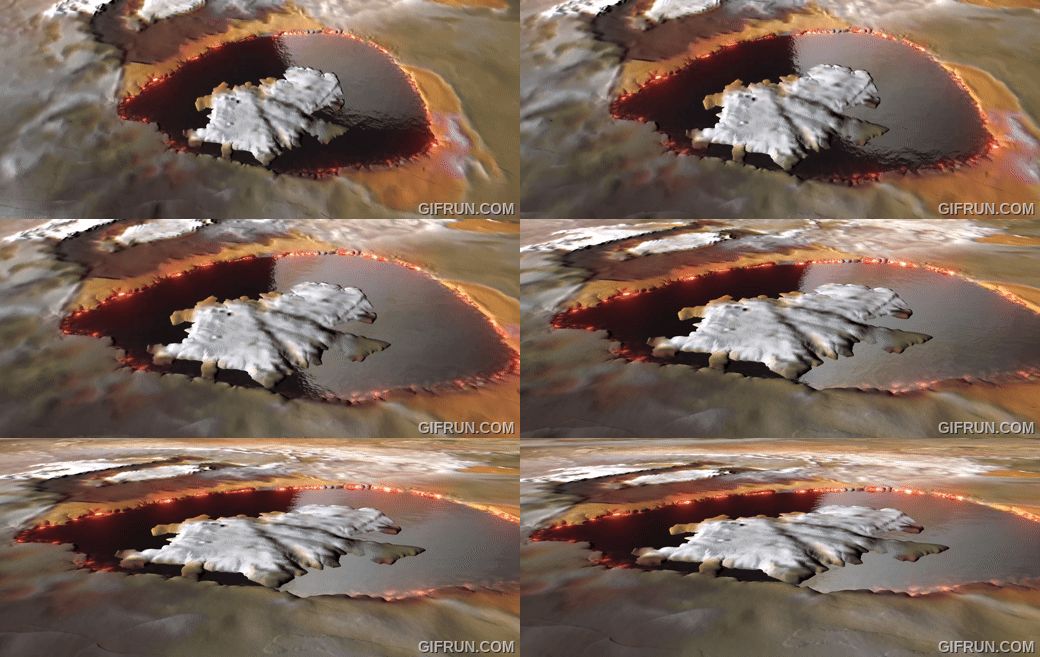
    This animation is an artist’s concept of Loki Patera, a lava lake on Jupiter’s moon Io, made using data from the JunoCam imager aboard NASA’s Juno spacecraft. With multiple islands in its interior, Loki is a depression filled with magma and rimmed with molten lava.  Credit: NASA/JPL-Caltech/SwRI/MSSS
    This animation shows an artist’s idea of Loki Patera, a lava lake on Jupiter’s moon Io, made using information from the JunoCam imager aboard NASA’s Juno spacecraft. With multiple islands inside, Loki is a hollow filled with magma and bordered with molten lava. Credit: NASA/JPL-Caltech/SwRI/MSSS.

    NASA has found a geological marvel on Jupiter’s fiery moon Io, the most volcanically active world in the solar system. Flybys by the Juno spacecraft revealed previously unknown and unusually steep mountains, as well as stunning islands in a lava lake.

    Using data from Juno, scientists created vibrant animations that display these volcanic lakes and towering mountains — a violent but oddly beautiful scenery.

    “Io is simply littered with volcanoes, and we caught a few of them in action,” said Scott Bolton, Juno’s principal investigator.

    “We also got some great close-ups and other data on a 200-kilometer-long (127-mile-long) lava lake called Loki Patera. There is amazing detail showing these crazy islands embedded in the middle of a potentially magma lake rimmed with hot lava. The specular reflection our instruments recorded of the lake suggests parts of Io’s surface are as smooth as glass, reminiscent of volcanically created obsidian glass on Earth.”
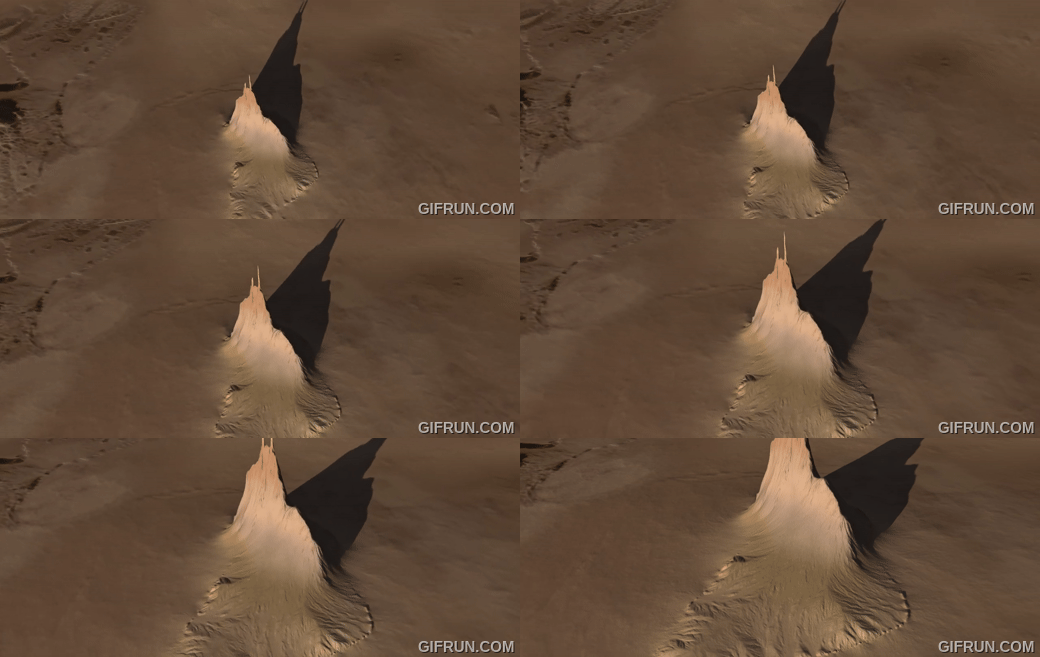
    Created using data collected by the JunoCam imager aboard NASA’s Juno during flybys in December 2023 and February 2024, this animation is an artist’s concept of a feature on the Jovian moon Io that the mission science team nicknamed “Steeple Mountain.” Credit: NASA/JPL-Caltech/SwRI/MSSS
    Created using data collected by the JunoCam imager aboard NASA’s Juno during flybys in December 2023 and February 2024. This animation is an artist’s concept of a feature on the Jovian moon Io that the mission science team nicknamed “Steeple Mountain.” Credit: NASA/JPL-Caltech/SwRI/MSSS

    Navigating Jupiter’s Stormy Atmosphere

    Juno has been gathering data on Jupiter, its rings, and its moons — collectively known as the Jovian system — since mid-2016 when it arrived in this distant cosmic neighborhood after a five-year journey. Since it beamed back its first data, Juno has given science one revelation after another about the inner workings of the solar system’s largest planet and its satellites.

    For instance, Juno has provided unprecedented glimpses into Jupiter’s atmosphere, including the discovery of massive cyclones at both poles, and insights into the planet’s deep internal structure. Notably, Juno has also provided stunningly detailed images of Jupiter’s clouds, showcasing their intricate patterns and vibrant colors.

    Every time Juno does a flyby, the spacecraft flies increasingly closer to the north pole of the gas giant. With each pass, the spacecraft’s Microwave Radiometer (MWR) instrument can study the northern polar cycles with better resolution.

    “Perhaps most striking example of this disparity can be found with the central cyclone at Jupiter’s north pole,” said Steve Levin, Juno’s project scientist at NASA’s Jet Propulsion Laboratory in Southern California.

    “It is clearly visible in both infrared and visible light images, but its microwave signature is nowhere near as strong as other nearby storms. This tells us that its subsurface structure must be very different from these other cyclones. The MWR team continues to collect more and better microwave data with every orbit, so we anticipate developing a more detailed 3D map of these intriguing polar storms.”

    The Mystery of Jupiter’s Water
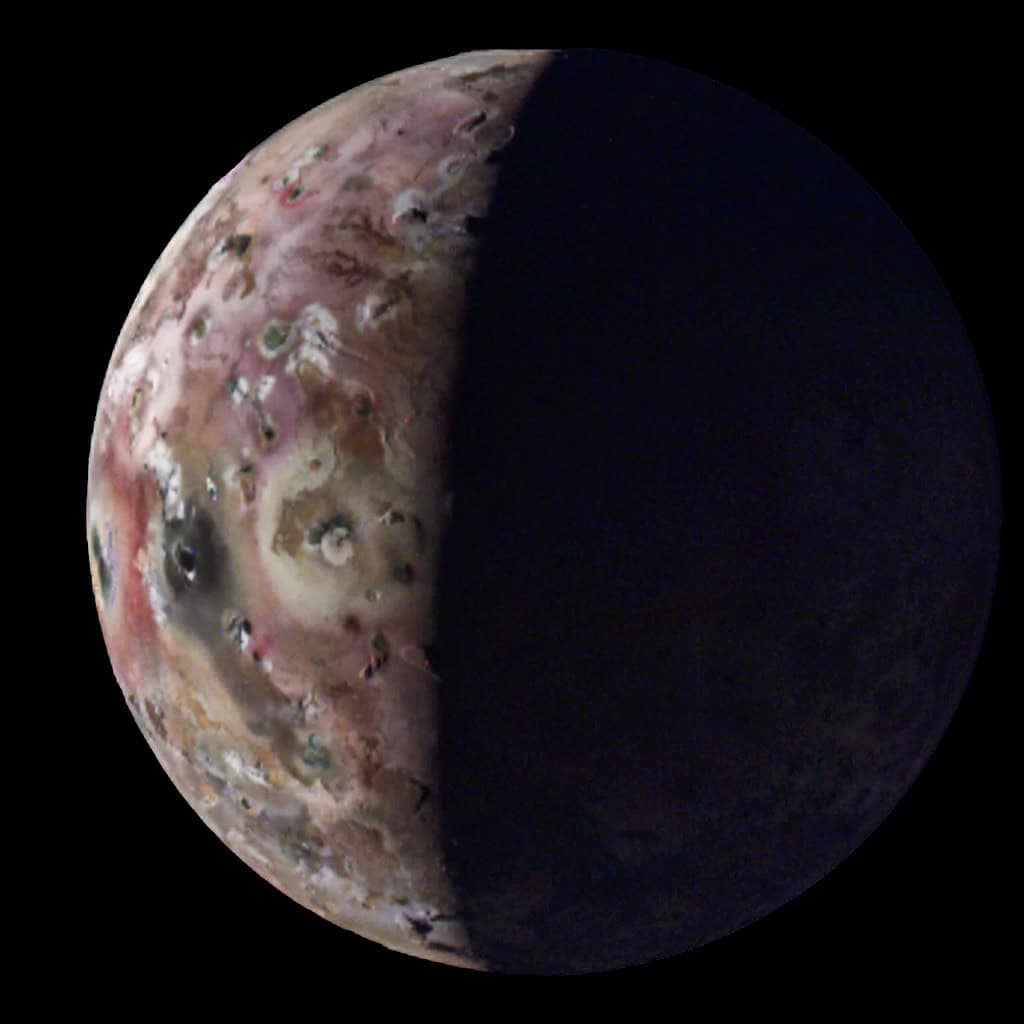
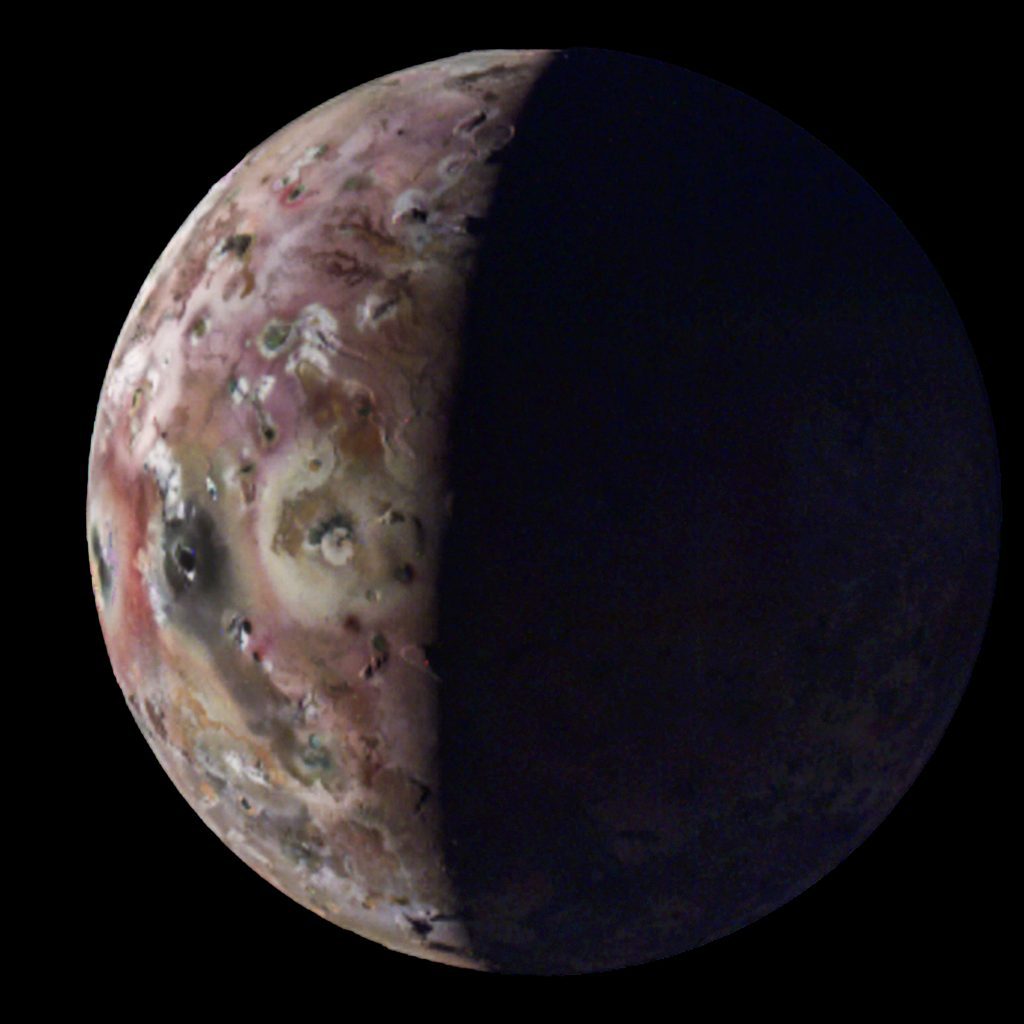
    The JunoCam instrument on NASA’s Juno captured this view of Jupiter’s moon Io — with the first-ever image of its south polar region — during the spacecraft’s 60th flyby of Jupiter on April 9. Credit: Image credit: NASA/JPL-Caltech/SwRI/MSSS. Image processing: Gerald Eichstädt/Thomas Thomopoulos (CC BY)
    The JunoCam instrument on NASA’s Juno captured this view of Jupiter’s moon Io — with the first-ever image of its south polar region — during the spacecraft’s 60th flyby of Jupiter on April 9. Credit: Image credit: NASA/JPL-Caltech/SwRI/MSSS. Image processing: Gerald Eichstädt/Thomas Thomopoulos (CC BY)

    Another significant aspect of Juno’s mission is its investigation into Jupiter’s water abundance. Understanding the distribution of water, or more specifically, the distribution of hydrogen and oxygen, is crucial for piecing together the narrative of our solar system’s origins.

    Jupiter was probably the first planet to form in the solar system from all the gas and dust that wasn’t incorporated by the Sun. Recent measurements indicate that the water content near Jupiter’s equator is several times higher than initial estimates, challenging earlier models based on data from the 1995 Galileo probe.

    The findings support the idea that water-ice materials might have contributed to the enrichment of Jupiter with heavy elements (chemical elements heavier than hydrogen and helium) during its formation or evolution. However, Juno’s observations are both enlightening and puzzling at the same time. The spacecraft’s data also points to an unexpectedly low water content in Jupiter’s core, and as such the gas giant’s formation still eludes scientists.

    As Juno continues its mission, more data could help clear up the differences in water amount between Jupiter’s polar and equatorial areas and give us a better understanding of the planet’s mysterious, spread-out core.

    Juno’s next important flyby is set for May 12, and the scientific community eagerly anticipates it. Each flyby not only improves our understanding of Jupiter’s atmospheric patterns but also brings us closer to answering important questions about how our solar system formed. composition and also brings us closer to answering important questions about how our solar system formed.


    Antoine Sánchez

    Keep Reading

    Child mental health forum to be held in Norristown

    Deciphering Thaksin’s invite to Myanmar’s ethnic groups

    Record travel anticipated this Memorial Day weekend

    Israel advances further into Rafah

    Add A Comment
    Leave A Reply Cancel Reply

    Must Read
    Latest Posts

    Child mental health forum to be held in Norristown

    May 13, 2024

    GameStop's stock prices surged when Roaring Kitty made a comeback on social media

    May 13, 2024

    Van Jones criticized possible Trump VP candidates for avoiding 2024 election questions, saying it's like failing kindergarten

    May 13, 2024

    Chicken fat supercapacitors may be able to store future green energy

    May 13, 2024

    Most students at prestigious universities believe that there is an issue with antisemitism, as per a survey conducted by U.S. News & World Report

    May 13, 2024
    The Plaza Journal White Logo
    X-twitter Facebook Google Pinterest Telegram

    News

    • World
    • US Politics
    • EU Politics
    • Business
    • Opinions
    • Connections
    • Science

    Company

    • Information
    • Advertising
    • Classified Ads
    • Contact Info
    • Do Not Sell Data
    • GDPR Policy
    • Media Kits

    The Plaza Journal

    • Contact Us
    • Subscription
    • Submit an Anonymous Tip
    • Newsletters
    • Sponsored News
    • Advertise With Us
    • Privacy Notice

    Keep updated

    Get the latest creative news from FooBar about art, design and business.

    Copyright © 2026 The Plaza Journal. All rights reserved.
    • Privacy Policy
    • Terms of Use
    • Cookie Policy
    • Accessibility

    Type above and press Enter to search. Press Esc to cancel.