


Imagine this possibility. In a not too distant future, people have enhanced tools to change the weather like cloud seeding technology to the point where weather is not only predictable, but controllable. In these situations, companies with relaxed government supervision maximize their influence over their surroundings, essentially making the weather itself a luxury item. Fancy ski resorts utilize this control to offer customers snowy vacations all year. Rainfall, once subject to natural forces, can now be bought whenever needed.
Those are just a few of the data-driven science fiction scenarios experts devised as part of a recent paper published in the journal Global Sustainability. The paper, headed by Colorado State University Assistant Professor Patrick Keys, invited international experts in global water topics to examine research he and his team gathered about the ways humans may be affecting atmospheric water cycles today and bring them to life through science fiction narratives and essays. They believe the descriptive, narrative approaches help provide a clearer view into a subject that is often overwhelmed by data and quantitative literature.
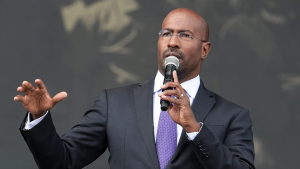
The experts devised 10 different scenarios with captivating titles like “We are as gods” and “Too much rain in paradise.” In that first example, the authors focused on a speech given by a future scientist discussing the potential risks of weather modification. Another scenario envisions a world where a politician, struggling to keep an advantage during an election season, uses weather management as a way to gain electoral favor. Other scenarios imagine a future where weather itself is privatized and rainfall can be sold to the highest bidder.
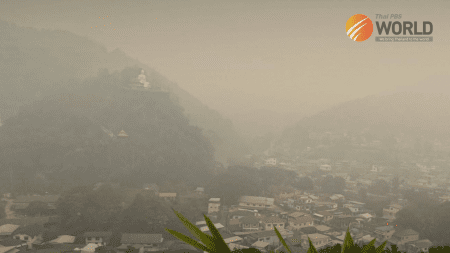
In the privatized rain example, a fictional rain provider called “AnyWeather” sends a message to a customer informing them that their request for a “Spring Rains Service” was rejected because it conflicted with another, presumably wealthier client who took precedence over them. Another scenario focuses on a fictional history podcast describing a peculiar, unsettling haze appearing over the Lagos, Nigeria skyline. The haze, according to the podcast, was the result of a geoengineering method called cloud condensation nuclei.
“Stories are everywhere and are an integral part of human life,” Keys said in a statement. “They tell you something different from a graph in a research paper. They allow you to explore how people may feel or react to these kinds of changes.”
Researchers used stories to bring data to life
People are already impacting weather patterns in ways that can be hard to visualize. Land use, pollution, and climate change, the researchers note, are all influencing where clouds form and the amount of rain that falls. Keys and his colleagues combined data from real journal entries and the speculative curiosity of science fiction to create a range of different scenarios exploring what the world might look like after years of human efforts to modify the atmosphere.
The researchers first collected written summaries of journal articles talking about how humans affect water cycles. Ideas from those summaries were then grouped into categories based on common economic principles. Experts in global water topics were then given the categories and asked to come up with imaginary situations. The stories were written in different styles, with some being like typical science fiction stories and others in the form of made-up journals and speeches.
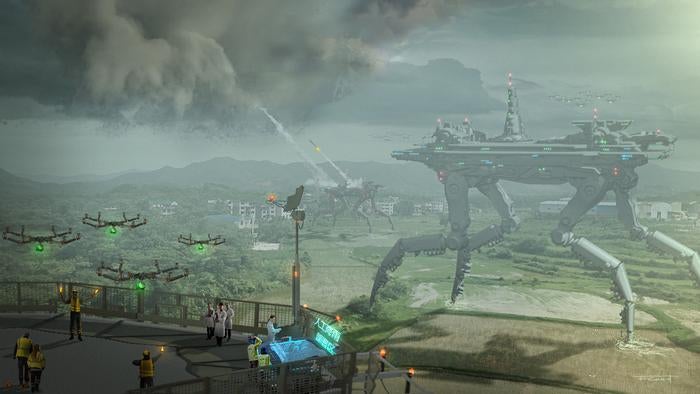
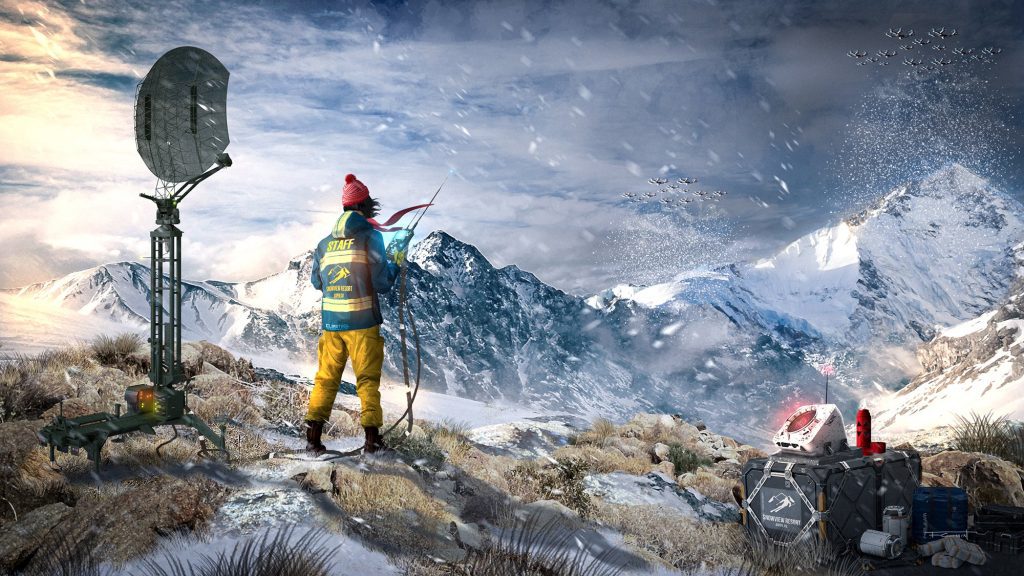
Keys then asked an artist named Fabio Comi to create pictures to go along with the stories. One of the images shows an employee at a cloud seeding company near a ski resort taking measurements and collecting data. Another image shows a four-legged robot the size of skyscrapers walking through a field and shooting cloud seeding missiles into the sky. A variety of smaller drones fly around as scientists watch from a distance. Although thought-provoking, the stories and images aren’t just meant to spark readers’ curiosity. Keys believes their descriptive power could also help shape public policy debates.
“These scenarios have the ability to raise interesting questions about policy, regulation and enforcement–what those may look like,” Keys said. “This approach can also help us recognize some aspects we may not be paying attention to and make better sense of it all.”
Cloud seeding and other climate manipulation methods are already being used to increase rainfall and, in some cases, to fight smog. At least eight US states are investigating cloud seeding specifically as a potential tool to address years of extreme drought. Despite ongoing efforts, the data-informed, fictional scenarios presented in the Global Sustainability paper offer a look into the different paths governments and private industry using these tools can take. Each of those scenarios is influenced in part by policy decisions and economic frameworks made many years before these sci-fi influenced events occur.
For now, critics argue that relying solely on geoengineering methods to address changing weather patterns is more like fiction than science. Cloud seeding currently only produces modest results and is possible only under specific, limited environmental conditions. Continued warming from climate change could decrease the chances of these conditions being met. Some scientists have also opposed other efforts like marine cloud brightening, pointing to limited research on the long-term effects of the technique. Even if these measures prove useful, others warn that they still won’t serve as a quick solution for significantly reducing greenhouse gas emissions and our dependence on fossil fuels.