




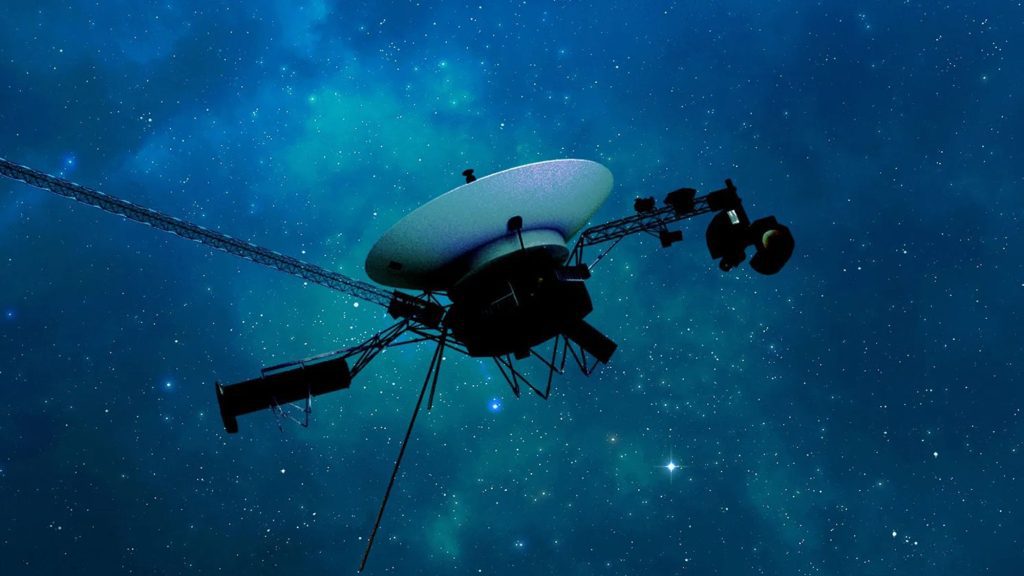
Somehow, when discussing space exploration, it seems like all the human-made projects have these incredible, inspiring names. Perseverance, Voyager, Challenger, Curiosity. However, this is not a coincidence. NASA has been carefully discussing and implementing rules for how they give official names to their spacecraft since the organization's early days in the 1960s.
The milestone of naming a mission or spacecraft is still met with excitement today, as it marks a sort of official recognition of the project—it makes it seem more real and gives the public a way to discuss a cutting edge science project. Recently, for example, the official naming of the project—it makes it seem more real and gives the public a way to bring up a cutting edge science project in conversation. Recently, for example, the China National Space Administration (CNSA) revealed names for its upcoming Lunar projects, which aim to get humans to the moon by 2030: a crew vessel named Mengzhuo (“dream vessel”) and a lander called Lanyue (“embracing the moon”).
So, how do these names come to be in the first place? Who decided to call NASA’s modern return to the moon Artemis, and where did CNSA come up with Lanyue?
The answer to that question depends on which space agency’s names you’re asking about, as there is no centralized authority a la airport code naming from the International Air Transport Association. “Names given to spaceflight projects and programs have originated from no single source or method. Some have their foundations in mythology and astrology, some in legend and folklore. Some have historic connotations. Some are based on a straightforward description of their mission,” explains the historical NASA document, “Origins of NASA Names” from 1976.
Lanyue, for example, comes from a 1965 Mao Zedong poem and was suggested by members of the Chinese public to capture the community’s spirit of reaching towards the moon. Another recent project—India’s Chandrayaan-2 and -3—also has a pretty literal meaning for a project traveling to the Moon. In Sanskrit, Chandrayaan literally means “mooncraft.” Other parts of the mission source their names from other bits of Indian culture and history; Chandrayaan-3’s lander Vikram is a tribute to one of the pioneers of the Indian Space Research Organization (ISRO), while the Pragyan rover gets its name from a Sanskrit word meaning “wisdom.”
This tradition of naming spacecraft after their targets in a language other than English even runs straight back to the beginning of the space race, with the then-USSR’s naming scheme. Sputnik, the first launched satellite, means “companion” or “satellite” in the astronomical sense. Venera, the Soviet mission to Venus, is actually just how you say Venus in Russian! Their progression of space stations faced a similar nomenclatorial fate: the original and somewhat military-focused Salyut meant salute, and the later Mir and Soyuz—peace and union respectively—tracked the transition to international cooperation in Earth orbit.
NASA, in particular, has been dealing with names since its beginning. In a 1963 memo, then-NASA Associate Administrator Robert C. Seamans, Jr. wrote, “The terminology used for the several spacecraft within the project, both before and after launch, has become somewhat confusing. It is important that we have a more nearly standard method of designating spacecraft.” That first mission directive, number 7620, became the foundation for decades of NASA policy surrounding mission names.
Their guidelines? Choose simple but unique words that won’t be confused with other NASA efforts (or international projects!), and start numbering if you have multiple spacecraft in a series (for example, Voyager 1 and Voyager 2). Try to avoid acronyms, and don’t write in all caps. According to a 1960 draft NASA directive, names must also “convey meaning consistent with NASA mission for the exploration, scientific investigation, and exploration of space for peaceful purposes.”
These somewhat simple rules allowed for a lot of flexibility in how names got to the proposal stage. For some missions, the team of scientists and engineers working on the project comes up with ideas themselves. Many famous names have also come from student essay contests, including the naming of the Sojourner Mars rover after abolitionist Sojourner Truth, designating ground relay stations in New Mexico with Native American names like Cacique (leader) and Danzante (dancer), and the more recent Perseverance rover in the Mars 2020 mission.
Many NASA satellites—the Hubble Space Telescope, the Nancy Grace Roman Space Telescope, the Parker Solar Probe—are named after people, particularly scientists and pioneers in astronomy. In the past few years, however, the first major change to Policy 7620 in decades was presented as a result of the James Webb Space Telescope naming controversy. Some criticized using the name of an administrator who was in power during a time of intense exclusion for gay employees (known as the Lavender Scare), and although NASA decided to keep the name, they did suggest future projects avoid naming themselves after individuals, in the most recent revision of Policy 7620.
What’s in a name contains the culture, values, heroes, and priorities of a given society and their space exploration program. A project like Lanyue captures the excitement of a return to the moon, while a project like the Perseverance rover reminds us that science requires determination. These names bring life to the goals of the mission and the dreams of the people creating them, and carve out a designation to make a mark on the history of space exploration.
Thank you to Nanette Smith and Stephen Garber from NASA History Division for their helpful guidance in finding historical policy memos and documents.