



Close Menu
    What's Hot

    Child mental health forum to be held in Norristown

    May 13, 2024

    GameStop's stock prices surged when Roaring Kitty made a comeback on social media

    May 13, 2024

    Van Jones criticized possible Trump VP candidates for avoiding 2024 election questions, saying it's like failing kindergarten

    May 13, 2024
    Facebook X (Twitter) Instagram Telegram
    Facebook X (Twitter) Instagram
    The Plaza JournalThe Plaza Journal
    Subscribe
    Monday, January 26
    • Sports
      • American Football
      • Basketball
      • Baseball
      • Boxing
      • Cricket
      • Football
      • Hockey
      • Tennis
    • Politics

      John Dean believes the hush money case against Trump is very strong

      May 13, 2024

      “Cruel and unfeeling” Trump assistant boasts about causing innocent homeless people to be arrested

      May 13, 2024

      Only 5 percent of people mention January 6th as the most important memory from Trump's presidency: Survey

      May 13, 2024

      7 in 10 say they’ve given a lot of thought to election: Gallup

      May 13, 2024

      Trump: ‘Hannibal Lecter is a wonderful man’

      May 13, 2024
    • Technology
    • United States
    • United Kingdom
    • Business
    • Entertainment
    • Science
      1. Archaeology
      2. Anthropology
      3. Space
      4. Biology
      5. Ecology
      6. Geology
      7. Nanotechnology
      8. Neurology
      9. Paleontology
      10. Psychology
      11. Mathematics
      12. Geography
      13. Astrophysics
      14. Oceanography
      15. Physics
      Featured

      How perspiration and endurance helped humans become excellent runners and hunters

      Biology May 13, 20244 Mins Read
      Recent

      How perspiration and endurance helped humans become excellent runners and hunters

      May 13, 2024

      Amazing photos of colorful skies around the world as auroras shine in bright colors

      May 11, 2024

      Scotland has suddenly seen a large increase in mosquitoes

      May 10, 2024
    • Health
    Facebook X (Twitter) Instagram
    The Plaza JournalThe Plaza Journal
    Home»Astronomy

    Eta Carinae – the star that exploded, but didn’t die

    By Carlos HansenFebruary 16, 2012 Astronomy 4 Mins Read
    Share
    Facebook Twitter LinkedIn Pinterest Email
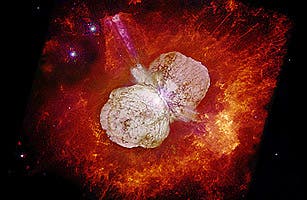
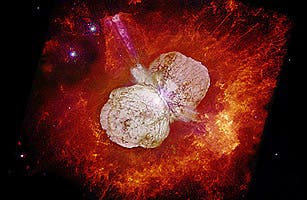
    The Eta Carina explosion took place more than 165 years ago - covered in a thick nebula. (c) N. Smith / J. A. Morse (U. Colorado) et al. / NASA
    The Eta Carinae explosion took place more than 165 years ago – covered in a thick nebula. (c) N. Smith / J. A. Morse (U. Colorado) et al. / NASA

    Around 1843, on the night sky all of a sudden a new luminous star made its appearance. That luminous star, which at the time was actually the 2nd brightest star, after Sirius, was actually the result of a explosion in Eta Carinae system – the brightest star in the Milky Way. The eruption spewed a mass 10 times that of our sun into space, and shined with intense brightness for 20 years or so, then faded and left behind a majestic, billowing cloud of gas known as the Homunculus Nebula. This event was called by astronomers a “supernova impostor”, as the star didn’t die, it just had a local, albeit extreme, explosion. Now, scientists are studying this event that took place almost 170 years ago in real-time (yes, as if it were happening right now), by analyzing the light echoes it left behind. This gets interesting.

    Observing Eta Carinae’s detailed structure has proven to be extremely difficult for astronomers, because of the Homunculus Nebula in which the system is engulfed – a thick cloud of dust and gas which was highly disturbing. The 1843 flare-up played out over 20 years, and XIX century astronomers did their best to observe and study it, however lacking the modern technology of today, they could only do so little. If only this bright explosion took place during our time…

    Few events remain unrecorded in the Universe’s history however, and considering scientists have been able to trace back some of the events close the very dawn of existence, capturing information that was transmitted just barely two centuries ago shouldn’t have posed too much of a headache for the researchers.

    When Eta Carinae erupted, light was blasted in all directions. Some reached Earth in the XIXth century, while other traveled for years and years through space, some eventually reaching cloud nebulae, which at turn reflected the light back to Earth with a delay. This light contains all the information scientists need, it’s basically like they would watch a faithfully accurate recording. Moreover, astronomers can study light echoes from a variety of different dust clouds, at varying distances from the star. That creates detours of varying lengths, so they can see different phases of the eruption all at once.

    “The big puzzle,” says Jose Prieto, a co-author of the report. “is what caused the outburst. This star has been studied to death with all sorts of telescopes, but no one theory has ever been able to tell us what happened.”

    The researchers admit that they currently do not know what caused the explosion, although there’s a somewhat mutually agreed assumption that the eruption took place from inside the star, which is 100 times the mass of the our own sun. They still have around 19 years and a half worth of real-time information coming through, so as the researchers  go through all the phases of luminous blue variable explosion, they might be able to decipher what went on.  Eta Carinae is somewhat at the end of its existence however, as astronomers believe it should blow in a supernova event very soon.

    “We know it’s close to the end of its life,” says astronomer Armin Rest, of the Space Telescope Science Institute and the lead author of the paper. “It could explode in a thousand years, or it could happen tomorrow.”

    At 7,500 light years from Earth, though, such an event would pose absolutely no threat to life on Earth, even if it were of an even massive dimension. When it’s finally going to die, though, Eta Carinae will most surely go down with a bang, most likely resulting in one of the most brightest spots in sky, if not the brightest – one to last for centuries.

    The findings were published in a recent edition of the journal Nature.

    Eta Carinae Nebula Supernova
    Carlos Hansen

    Keep Reading

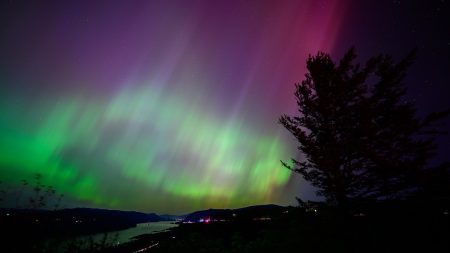
    Amazing photos of colorful skies around the world as auroras shine in bright colors

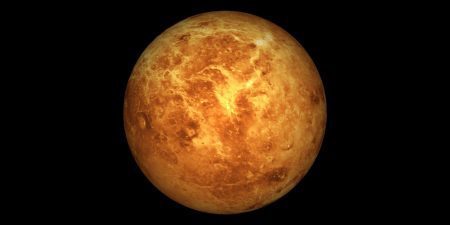
    A new study is getting close to figuring out what happened to all of Venus's water

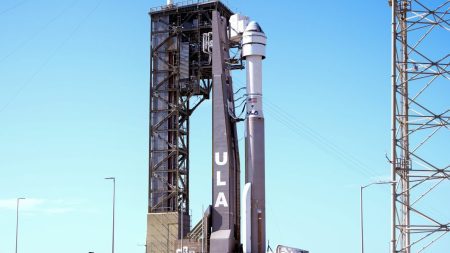
    First manned Boeing Starliner launch called off due to valve issue

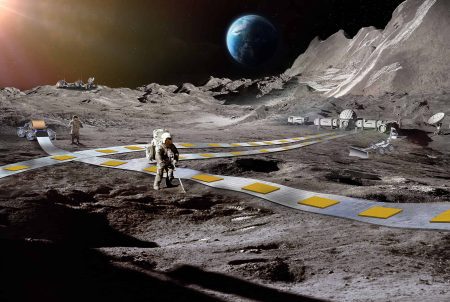
    NASA desires to construct a futuristic floating railway on the moon (and many other things)

    Add A Comment
    Leave A Reply Cancel Reply

    Must Read
    Latest Posts

    Child mental health forum to be held in Norristown

    May 13, 2024

    GameStop's stock prices surged when Roaring Kitty made a comeback on social media

    May 13, 2024

    Van Jones criticized possible Trump VP candidates for avoiding 2024 election questions, saying it's like failing kindergarten

    May 13, 2024

    Chicken fat supercapacitors may be able to store future green energy

    May 13, 2024

    Most students at prestigious universities believe that there is an issue with antisemitism, as per a survey conducted by U.S. News & World Report

    May 13, 2024
    The Plaza Journal White Logo
    X-twitter Facebook Google Pinterest Telegram

    News

    • World
    • US Politics
    • EU Politics
    • Business
    • Opinions
    • Connections
    • Science

    Company

    • Information
    • Advertising
    • Classified Ads
    • Contact Info
    • Do Not Sell Data
    • GDPR Policy
    • Media Kits

    The Plaza Journal

    • Contact Us
    • Subscription
    • Submit an Anonymous Tip
    • Newsletters
    • Sponsored News
    • Advertise With Us
    • Privacy Notice

    Keep updated

    Get the latest creative news from FooBar about art, design and business.

    Copyright © 2026 The Plaza Journal. All rights reserved.
    • Privacy Policy
    • Terms of Use
    • Cookie Policy
    • Accessibility

    Type above and press Enter to search. Press Esc to cancel.