



When you get hurt, your body forms a blood clot to stop bleeding. But what about insects? Scientists have recently explained how caterpillars can quickly stop bleeding, something that has confused researchers for a long time.
In contrast to vertebrates, whose blood clotting mechanisms have been well-known for a long time, insects use hemolymph (their equivalent of blood). Hemolymph lacks red blood cells, hemoglobin, and platelets. Instead, hemolymph uses hemocytes, cells similar to amoebas, for clotting and immune defense.
Now, scientists led by Dr. Konstantin Kornev, a professor at the Department of Materials Science and Engineering of Clemson University, have discovered step-by-step how hemolymph clots — and this could have important applications in human medicine. These may include blood thickeners that prevent blood clots, help with heart valve surgery recovery, or treat atrial fibrillation.
“Here we show that these caterpillars, called tobacco hornworms, can seal the wounds in a minute. They do that in two steps: first, in a few seconds, their thin, water-like hemolymph becomes ‘viscoelastic’ or slimy, and the dripping hemolymph retracts back to the wound,” said senior author Dr. Konstantin Kornev, a professor at the Department of Materials Science and Engineering of Clemson University.
“Next, hemocytes aggregate, starting from the wound surface and moving up to embrace the coating hemolymph film that eventually becomes a crust sealing the wound.”
A Two-Step Healing Process
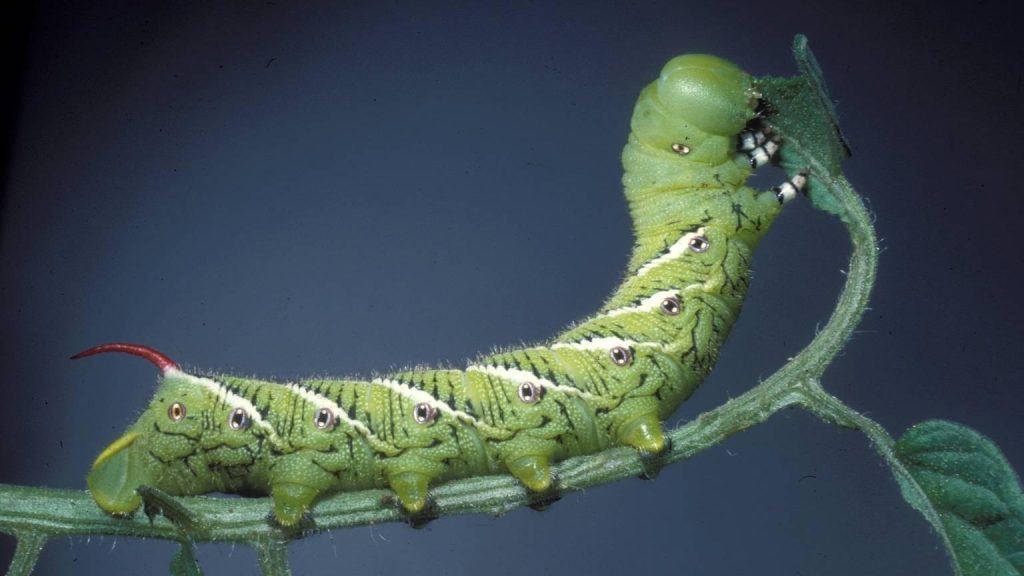
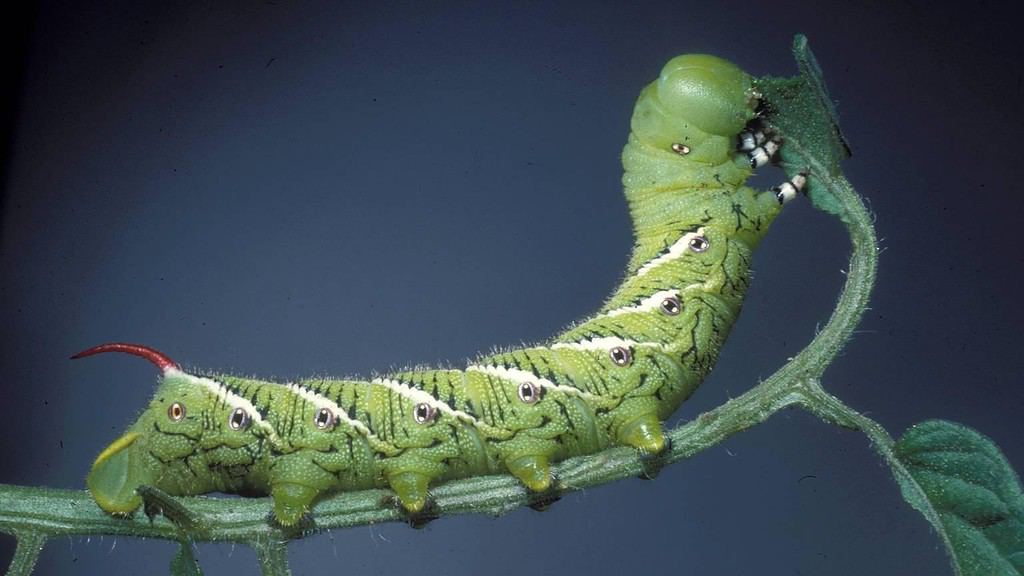
Some caterpillars turn into butterflies. But tobacco hornworms are the larval stages of Carolina sphinx moths (Manduca sexta), robust and agile moths belonging to the family Sphingidae. During their caterpillar lives, the tobacco hornworm can be a major pest in gardens. They get their name from a dark projection on their posterior end and because they love munching on tobacco. But they also enjoy tomatoes, pepper, eggplants, and a suite of other green goodies. When fully grown and ready for their metamorphosis into moths, these caterpillars can grow quite large, between 7.5 cm and 10 cm ( 3 to 4 in) long.
Despite their hefty size for an insect, tobacco hornworms contain only a tiny amount of hemolymph. This makes studying their clotting difficult. However, the most challenging part of this study was that these caterpillars were ironically too good at stopping bleeding. Each time Kornev and colleagues would prick a caterpillar, the hemolymph would clot within seconds, which was not enough time for effective study.
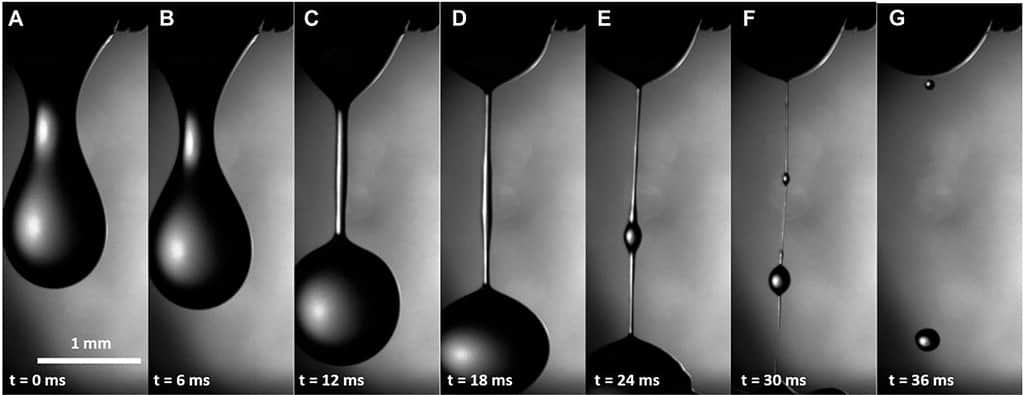
To overcome these challenges, Kornev and his team developed innovative techniques — although even with this innovation they faced a high failure rate of up to 95%. They secured the hornworms in a plastic sleeve, made a small incision in one of the caterpillar’s pseudolegs, and formed a temporary hemolymph bridge by touching the leaking fluid with a metal ball and pulling it away. The very narrow hemolymph film got increasingly narrow until it finally broke, producing many tiny satellite droplets.
The entire process was recorded using high-speed cameras and macro lenses for detailed analysis.
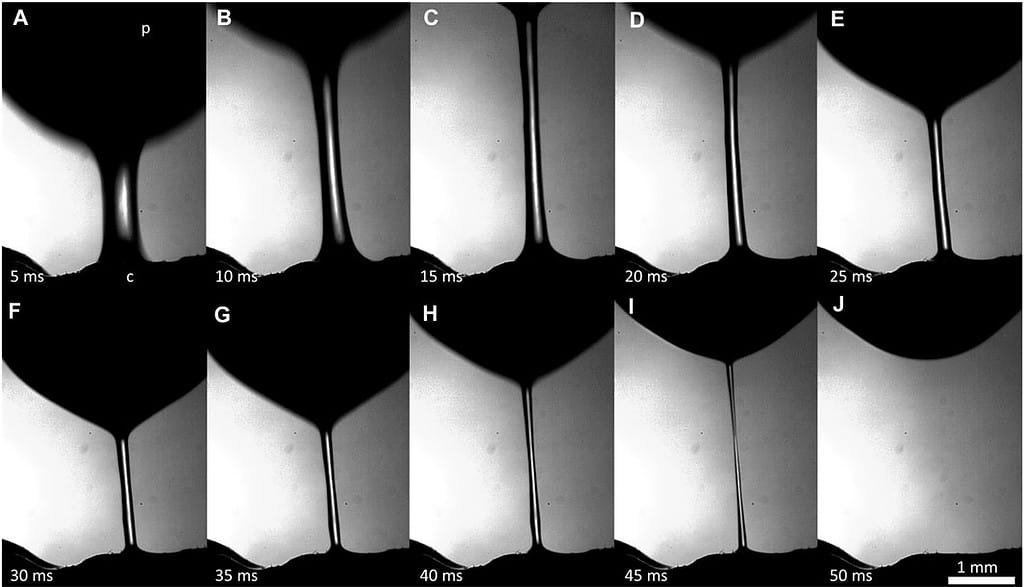
Initially, the hemolymph flowed like water, behaving as a Newtonian fluid with low viscosity. However, within 10 seconds, it transformed, forming a longer bridge instead of breaking immediately. The bleeding typically ceased within 60 to 90 seconds as a crust formed over the cut.
More tests included spinning a small nickel rod in a bead of fresh insect blood with a rotating magnetic field. Watching the movement of the rod gave insight into the thickness of the insect blood. Shortly after being released, the insect blood changes from a thin consistency to a thick, elastic fluid, similar to saliva, which is both thick and stretchy due to large molecules called mucins.
Bendy properties
The team expanded their research to include optical phase-contrast and polarized microscopy, X-ray imaging, and materials science modeling to study how cells gather to form a crust over wounds. This study covered not only the Carolina sphinx moths and their caterpillars but also 18 other insect species.
The study discovered that while the blood from all examined species similarly resisted forces that cut through it, their responses to being stretched differed significantly. In caterpillars and cockroaches, which have blood rich in blood cells, the fluid stretched into bridges. On the other hand, in grown-up butterflies and moths, which have less blood-cell-dense blood, the droplets broke immediately when stretched.
“Turning hemolymph into a viscoelastic fluid appears to help caterpillars and cockroaches to stop any bleeding, by retracting dripping droplets back to the wound in a few seconds,” said Kornev. “We conclude that their hemolymph has an extraordinary ability to instantaneously change its material properties. Unlike silk-producing insects and spiders, which have a special organ for making fibers, these insects can make hemolymph filaments at any location upon wounding.”
This finding highlights the role of blood cells in the clotting process, suggesting that certain insects have a natural ability to change the properties of their blood as needed. This characteristic is not seen in their grown-up counterparts like butterflies and moths.
“Our discoveries open the door for designing fast-working thickeners of human blood. We needn’t necessarily copy the exact biochemistry, but should focus on designing drugs that could turn blood into a viscoelastic material that stops bleeding. We hope that our findings will help to accomplish this task in the near future,” said Kornev.
The results were published in the journal Frontiers in Soft Matter.
Was this helpful?
Related Posts
- Tesla want to make cars so good you won’t ever care about oil prices
- Meet the three people paying $55 million for a space vacation
- The world’s landmass will unite to form a new supercontinent. Meet Amasia
- What Causes Addicts to Relapse?