




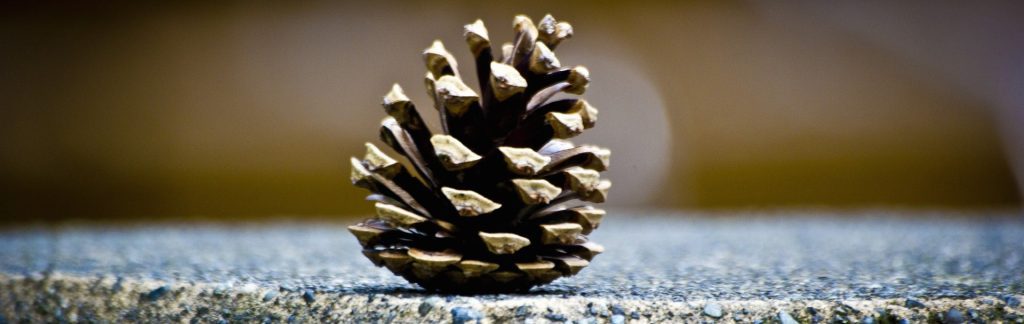
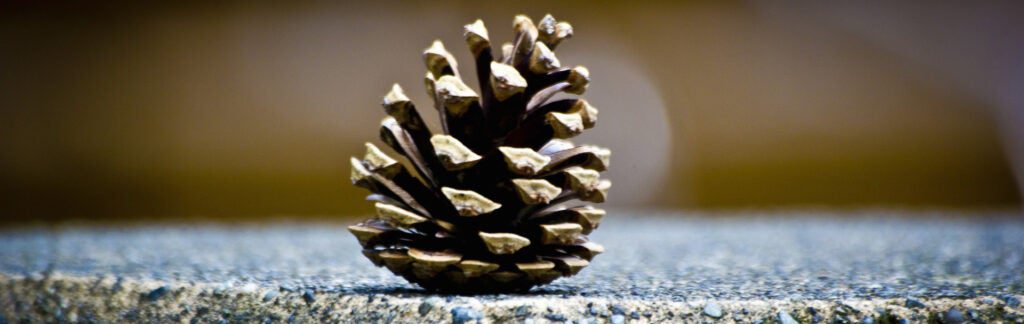
Scientists who invent things often look to nature for inspiration. Their goal is to mimic biological systems in order to create new consumer products, or improve existing ones. The 1941 introduction of Velcro, for example, grew out of a Swiss engineer’s curiosity about why Burdock seeds clung to his coat — and that of his dog — when they were walking through the woods. Today, responding to the growing urgency of climate change, researchers are turning to biology for ideas to reduce emissions and save energy.
Cordt Zollfrank, a chemist, forest scientist and materials researcher at the Technical University of Munich (TUM), thinks he’s found one potential source that could turn energy-sapping buildings into energy-saving ones: tree cones.
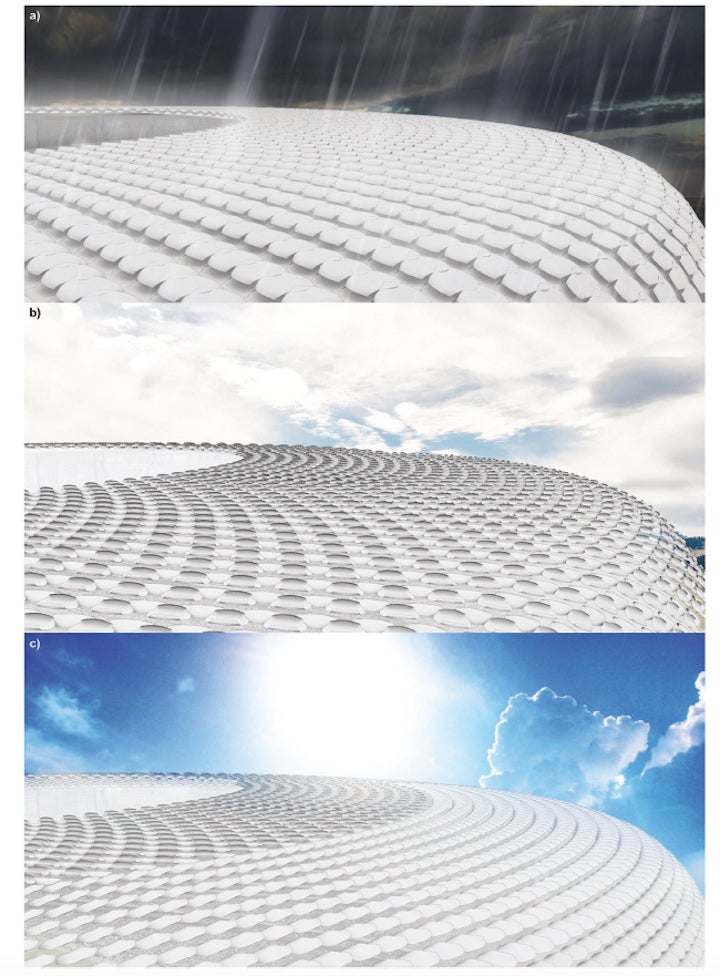
Cones produced by such trees as pines, spruce, hemlock, and fir respond naturally to different degrees of humidity by opening and closing, without consuming any electrical energy in doing so. Designing window blinds based on their mechanical properties that could open and close in response to moisture — but use no energy in the process — could conserve a lot of energy. Many buildings (as well as homes) use motorized blinds or shades that run on plug-in electricity or batteries.
But the approach also has many additional potential applications — valves and gates, for example, “wherever we find humidity changes, such as in climate control units, wherever you want to move something, depending on the environmental conditions,” said Zollfrank, who chairs the university’s department of biogenic polymers.
“Saving and reducing the consumption of electrical energy is one of the major future challenges for industry and society,” he said. “Saving electrical energy means saving our environment and slowing down climate change. Sustainable architecture urgently requires new materials.”
Mechanical moving products in engineering, construction, and convenience need a power source to make them move, “therefore, a device that moves but doesn’t require electrical energy would be highly desired,” Zollfrank said.
Buildings are the largest consumers of energy worldwide, accounting for 40 percent or more of energy consumption, according to the International Energy Agency. Buildings use most of their energy for heating or cooling, so devices requiring little or no energy could help reduce that consumption. Many rely on electrically powered climate control systems, which include mobile window treatments that help control cooling and heat.

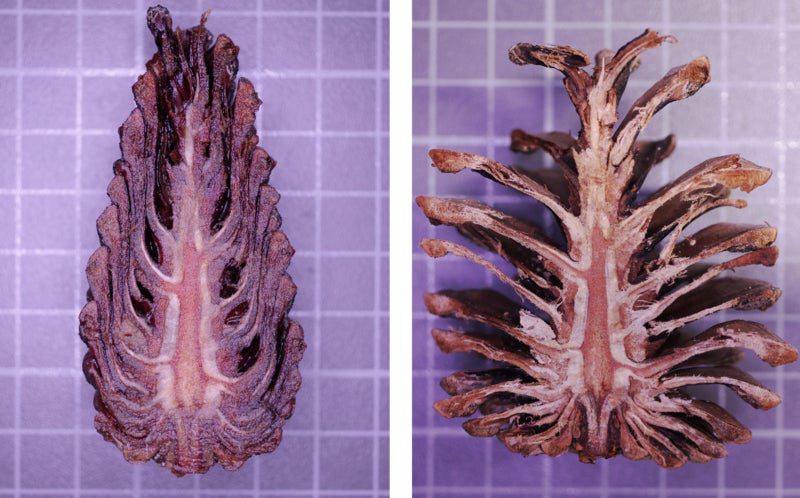
A team from TUM, and the Universities of Freiburg and Stuttgart is developing a system based on the mechanical behavior of pine and fir cones. The cones close their scales when it rains in order to protect their seeds, and open them up to release their seeds when it is dry. The cell walls of the cones are composed of lignin, which doesn’t swell much, and cellulose, which is quite good at swelling up. The fibers in their tissues curve inwards when humidity is high, and outwards when it is dry.
“The cellulose fibrils in the scale can swell or shrink, and are arranged in specific ways in the coniferous scale,” Zollfrank said. “So we are trying to generate artificial swellable materials mimicking the biological original. We also build them from renewable sources.”
The material the scientists use is cellulose, a polysaccharide, “the most abundant biopolymer in the world,” Zollfrank said. “It occurs in the cell wall of plants, where it is the principal structural component. In plants, it is usually accompanied by other polysaccharides and lignin. Cellulose is obtained from such lignocellulocis by pulping of wood. Actuators [elements that drive the devices] can be therefore pure cellulose or wood-based. So the materials are fully renewable and sustainably available.”
The research recently appeared in the journal Advanced Materials.
Zollfrank and his collaborators already have successfully developed actuators composed of two layers of materials that absorb varying amounts of liquid and behave a lot like their naturally occurring counterparts. However, they must solve one problem before these materials can be widely used in architecture: the larger the cell or tissue, the longer it takes for water to penetrate its pores toward the inside. A process that takes two hours in a pine cone requires several years to work in a building.
But the researchers think they know how to fix it.
“The whole scale is composed of individual cells forming the scale cell tissue,” Zollfrank explained. “The water — that is, the humidity — has to ‘drown/bathe’ the scale tissue in a diffusion-based transport process, which makes it slow. However, an individual cell would act fast. So the idea is to make the actuating material from small, micron-sized fast-moving individual cells.”
As a materials scientist, he’s optimistic about their potential. “The exciting thing about this is that the energy for these movements does not come from metabolic processes but solely from physical mechanisms and material properties,” he said.
Marlene Cimons writes for Nexus Media, a syndicated newswire covering climate, energy, policy, art and culture.