




Close Menu
    What's Hot

    Child mental health forum to be held in Norristown

    May 13, 2024

    GameStop's stock prices surged when Roaring Kitty made a comeback on social media

    May 13, 2024

    Van Jones criticized possible Trump VP candidates for avoiding 2024 election questions, saying it's like failing kindergarten

    May 13, 2024
    Facebook X (Twitter) Instagram Telegram
    Facebook X (Twitter) Instagram
    The Plaza JournalThe Plaza Journal
    Subscribe
    Tuesday, February 17
    • Sports
      • American Football
      • Basketball
      • Baseball
      • Boxing
      • Cricket
      • Football
      • Hockey
      • Tennis
    • Politics

      John Dean believes the hush money case against Trump is very strong

      May 13, 2024

      “Cruel and unfeeling” Trump assistant boasts about causing innocent homeless people to be arrested

      May 13, 2024

      Only 5 percent of people mention January 6th as the most important memory from Trump's presidency: Survey

      May 13, 2024

      7 in 10 say they’ve given a lot of thought to election: Gallup

      May 13, 2024

      Trump: ‘Hannibal Lecter is a wonderful man’

      May 13, 2024
    • Technology
    • United States
    • United Kingdom
    • Business
    • Entertainment
    • Science
      1. Archaeology
      2. Anthropology
      3. Space
      4. Biology
      5. Ecology
      6. Geology
      7. Nanotechnology
      8. Neurology
      9. Paleontology
      10. Psychology
      11. Mathematics
      12. Geography
      13. Astrophysics
      14. Oceanography
      15. Physics
      Featured

      How perspiration and endurance helped humans become excellent runners and hunters

      Biology May 13, 20244 Mins Read
      Recent

      How perspiration and endurance helped humans become excellent runners and hunters

      May 13, 2024

      Amazing photos of colorful skies around the world as auroras shine in bright colors

      May 11, 2024

      Scotland has suddenly seen a large increase in mosquitoes

      May 10, 2024
    • Health
    Facebook X (Twitter) Instagram
    The Plaza JournalThe Plaza Journal
    Home»Animals

    Like Darwin’s Finches, But Weirder, Bat Faces Showcase Amazing Adaptations

    By Antoine SánchezFebruary 7, 2014 Animals 5 Mins Read
    Share
    Facebook Twitter LinkedIn Pinterest Email

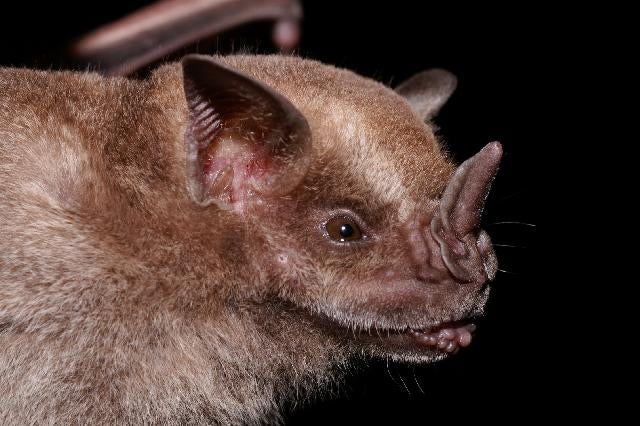
    Bats come in a dazzling array of shapes and sizes, representing some of the widest variation among all mammals — most notably the New World leaf-nosed bats. These creatures, which when photographed often look drowsy and avuncular, are distinguished by horn-like appendages on their noses. These are called nose-leaves, and they modify the bats’ nasal echolocation calls. But the similarities across species mostly ends there.

    Some nose-leaves are stubby and wide, while some shoot up unicorn-like. Some bats have flat, fleshy faces, while others have gracefully long snouts; some have beady little eyes and others have big almond eyes; some have rounded, smiley jaws and others have the scrunched-up visage of a bulldog, or a boxer who badly lost a fight.

    They range in size from about an inch and a half to about six inches long, and they evolved to eat everything nature has to offer: insects, fruit, nectar, pollen, frogs, other bats, and most famously, blood.

    They offer great examples of adaptive radiation in mammals — much like Darwin’s finches of the Galapagos, whose varied beaks offer a lovely view of natural selection at work. But Darwin didn’t have CT scans and CAD software.

    Biologist Betsy Dumont does, and she is using it to unravel the evolutionary pressures involved in the bats’ explosive radiation. In a new paper, she and her colleagues combine engineering analysis with evolution to spell out how mechanical advantage, basically a bat’s ability to chomp, is a target of natural selection. It helps to think about this in terms of cats and dogs: Dogs with longer faces have fast-working jaws, but their mechanical advantage is lower than that of cats, which have short faces and ultra-strong bite forces.
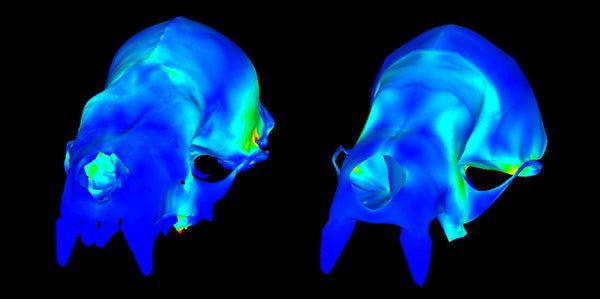
    This depicts a finite element analysis of the skull of a bat called Carollia perspicillata (left) and the engineering model of the same bat. FEM is an engineering technique developed to study how a system will respond to structural stress, and now it's being used to study skull evolution.

    Bat CT Scan and Model

    This depicts a finite element analysis of the skull of a bat called Carollia perspicillata (left) and the engineering model of the same bat. FEM is an engineering technique developed to study how a system will respond to structural stress, and now it’s being used to study skull evolution.

    Dumont and fellow scientists capture bats in mist nets, like gossamer volleyball nets strung across two poles in the rainforest. Biologists carefully pick up the stuck bats and get them to bite a small gizmo — “which is not difficult,” Dumont assures — to measure the force of their chomping.

    “They’re small — the biggest ones are 100 grams, and we’re looking at ones that go up to 60 or 70 grams,” Dumont explains. “But they can still bite wicked hard because they have sharp teeth.”

    In this study, the team wanted to figure out which biomechanical factors, if any, were behind the evolution of such crazy-looking bat faces and head shapes. They wanted to build engineering models that could simulate the forces of stress — in terms of the forces a structure can withstand — and mechanical advantage for any bat on the evolutionary tree, and any bat that could possibly exist, even if it doesn’t. They started with a CT scan of a bat and morphed it from there, creating models of any possible jaw lengths or widths. Then the biologists can find numerical values for stress and mechanical advantage among those models.

    “To some extent, there is a tradeoff between the two. Nectar feeders have these really long faces, and they have lousy mechanical advantage but they’re also really highly stressed. At the other end of spectrum, animals with super short faces have excellent bite force, but are also kind of stressed,” Dumont says. “There is a sweet spot in the middle where most species are.”
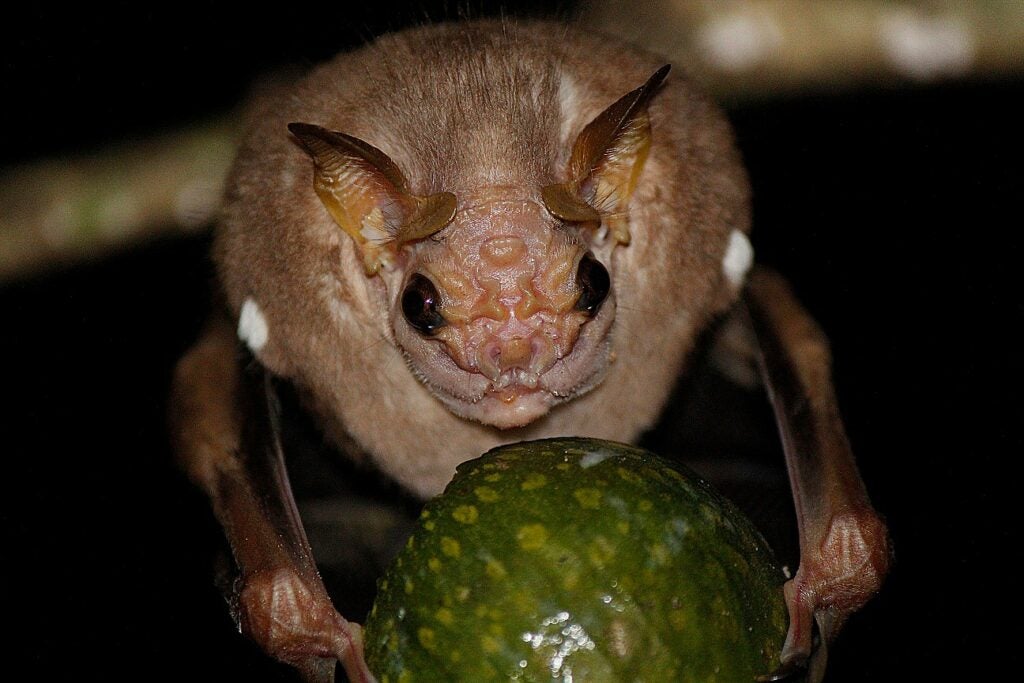
    The wrinkle-faced bat <em>Centurio senex</em> generates the strongest bite known for any leaf-nosed bat. Here is one with a fruit prize.

    Wrinkle-faced Bat

    The wrinkle-faced bat Centurio senex generates the strongest bite known for any leaf-nosed bat. Here is one with a fruit prize.

    It turns out natural selection has favored three basic bat shapes: Long and thin, short and wide, and “in between,” as Dumont puts it. Short, wide bat faces specialize in eating very hard fruits, like wild figs. Long, slender snouts fit nicely into deep flowers, where the nectar is. And of course there’s an outlier: Vampire bats, which are kind of “just weird.”

    “They have relatively high mechanical advantage, and are sort of that in-between group where they’re maybe a little more stressed than that main group, less structurally sound,” Dumont says. They are also tricky to study, she adds: “They are just mean when you catch them. They know what their weapons are,” she says. “They pretend they are all stuck in the net and then they lunge at you with those horrible teeth.”

    Aside from the outlier vampires, the findings illustrate that mechanical advantage was more important than structural strength in the evolution of these bat faces. And figuring out which biomechanical actions were under selection goes a long way toward explaining why bats have such endless, beautiful forms.
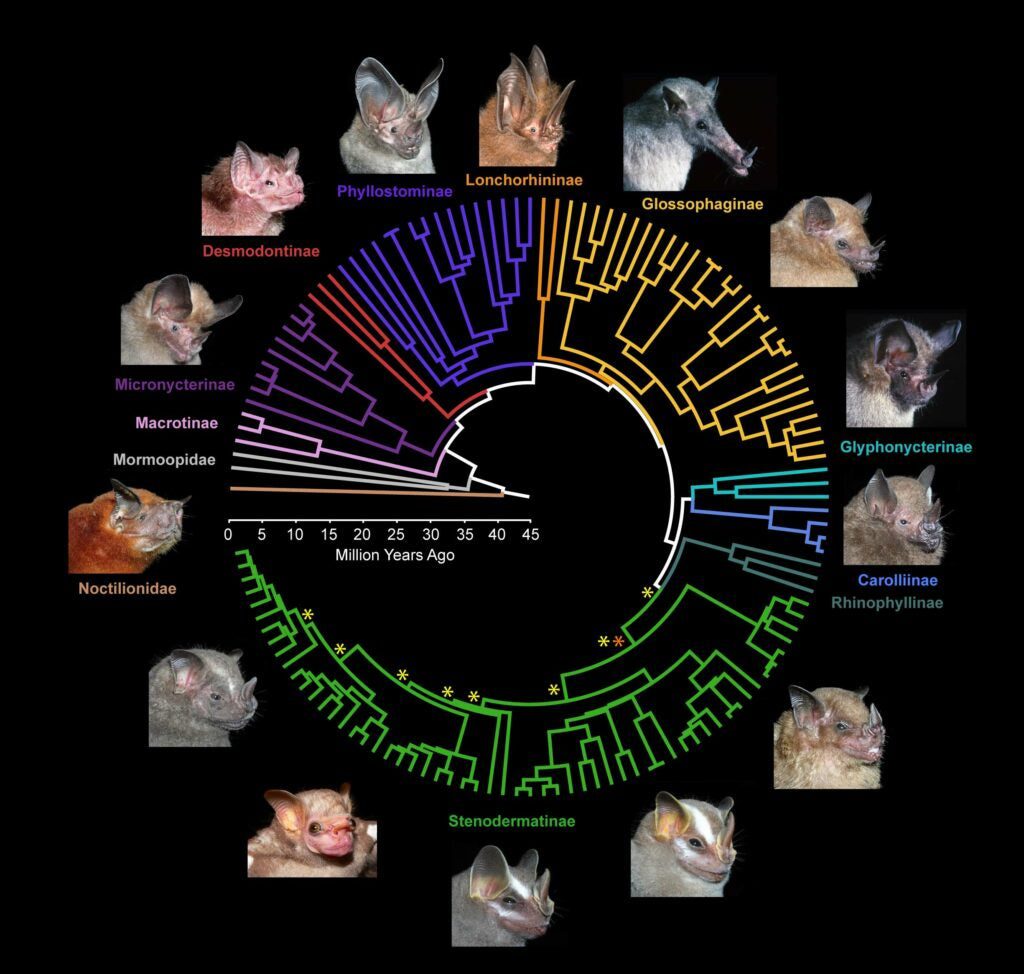
    This diagram shows the extraordinary changes that have evolved among leaf-nosed bats in the New World across millions of years. The animals' faces are specialized for the types of food they eat, including fruit, insects and other vertebrates.

    Bat Faces and Phylogenetic Tree

    This diagram shows the extraordinary changes that have evolved among leaf-nosed bats in the New World across millions of years. The animals’ faces are specialized for the types of food they eat, including fruit, insects and other vertebrates.

    Reference: Selection for Mechanical Advantage Underlies Multiple Cranial Optima in New World Leaf-Nosed Bats. Evolution, 2014; DOI: 10.1111/evo.12358

    Antoine Sánchez

    Keep Reading

    Chicken fat supercapacitors may be able to store future green energy

    Aquatic activities near Kradan Island will be stopped to protect the coral

    On the intense front line of Thailand’s battle against smog

    The first ‘extreme’ solar storm in 20 years resulted in stunning auroras

    Add A Comment
    Leave A Reply Cancel Reply

    Must Read
    Latest Posts

    Child mental health forum to be held in Norristown

    May 13, 2024

    GameStop's stock prices surged when Roaring Kitty made a comeback on social media

    May 13, 2024

    Van Jones criticized possible Trump VP candidates for avoiding 2024 election questions, saying it's like failing kindergarten

    May 13, 2024

    Chicken fat supercapacitors may be able to store future green energy

    May 13, 2024

    Most students at prestigious universities believe that there is an issue with antisemitism, as per a survey conducted by U.S. News & World Report

    May 13, 2024
    The Plaza Journal White Logo
    X-twitter Facebook Google Pinterest Telegram

    News

    • World
    • US Politics
    • EU Politics
    • Business
    • Opinions
    • Connections
    • Science

    Company

    • Information
    • Advertising
    • Classified Ads
    • Contact Info
    • Do Not Sell Data
    • GDPR Policy
    • Media Kits

    The Plaza Journal

    • Contact Us
    • Subscription
    • Submit an Anonymous Tip
    • Newsletters
    • Sponsored News
    • Advertise With Us
    • Privacy Notice

    Keep updated

    Get the latest creative news from FooBar about art, design and business.

    Copyright © 2026 The Plaza Journal. All rights reserved.
    • Privacy Policy
    • Terms of Use
    • Cookie Policy
    • Accessibility

    Type above and press Enter to search. Press Esc to cancel.