



Close Menu
    What's Hot

    Child mental health forum to be held in Norristown

    May 13, 2024

    GameStop's stock prices surged when Roaring Kitty made a comeback on social media

    May 13, 2024

    Van Jones criticized possible Trump VP candidates for avoiding 2024 election questions, saying it's like failing kindergarten

    May 13, 2024
    Facebook X (Twitter) Instagram Telegram
    Facebook X (Twitter) Instagram
    The Plaza JournalThe Plaza Journal
    Subscribe
    Sunday, February 15
    • Sports
      • American Football
      • Basketball
      • Baseball
      • Boxing
      • Cricket
      • Football
      • Hockey
      • Tennis
    • Politics

      John Dean believes the hush money case against Trump is very strong

      May 13, 2024

      “Cruel and unfeeling” Trump assistant boasts about causing innocent homeless people to be arrested

      May 13, 2024

      Only 5 percent of people mention January 6th as the most important memory from Trump's presidency: Survey

      May 13, 2024

      7 in 10 say they’ve given a lot of thought to election: Gallup

      May 13, 2024

      Trump: ‘Hannibal Lecter is a wonderful man’

      May 13, 2024
    • Technology
    • United States
    • United Kingdom
    • Business
    • Entertainment
    • Science
      1. Archaeology
      2. Anthropology
      3. Space
      4. Biology
      5. Ecology
      6. Geology
      7. Nanotechnology
      8. Neurology
      9. Paleontology
      10. Psychology
      11. Mathematics
      12. Geography
      13. Astrophysics
      14. Oceanography
      15. Physics
      Featured

      How perspiration and endurance helped humans become excellent runners and hunters

      Biology May 13, 20244 Mins Read
      Recent

      How perspiration and endurance helped humans become excellent runners and hunters

      May 13, 2024

      Amazing photos of colorful skies around the world as auroras shine in bright colors

      May 11, 2024

      Scotland has suddenly seen a large increase in mosquitoes

      May 10, 2024
    • Health
    Facebook X (Twitter) Instagram
    The Plaza JournalThe Plaza Journal
    Home»Remote sensing

    Voyager-1 on the brink of interstellar flight

    By Tyrone JonesJune 16, 2011 Remote sensing 3 Mins Read
    Share
    Facebook Twitter LinkedIn Pinterest Email
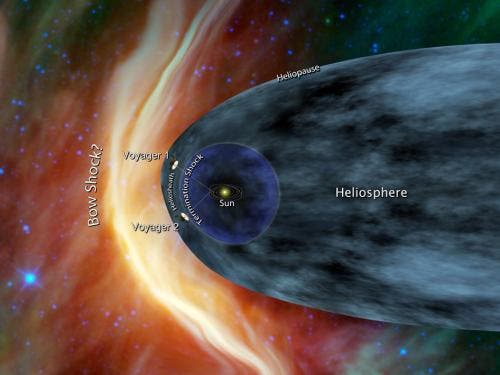
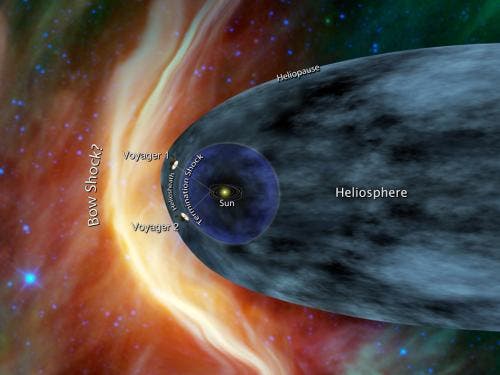
    Artist impression of the Voyager-1 spacecraft, and its partner, Voyager-2, as they're approaching the edge of the Sun's protective bubble, separating them from interstellar flight. (c) NASA/JPL-Caltech
    Artist impression of the Voyager-1 spacecraft, and its partner, Voyager-2, as they're approaching the edge of the Sun's protective bubble, separating them from interstellar flight. (c) NASA/JPL-Caltech

    Launched in in the late 1970’s in a mission to study the planets Jupiter, Saturn and their respective satellites, the two Voyager probes have been most certainly put to a more pioneering goal and sent into outer space after having completed their last missions. Currently, Voyager-1 is the most distant human-made object from Earth and is now quite ready the break the barrier that separates our solar system from interstellar space.

    Right now, Voyager is at the so called ‘heliosheath‘ limit, a boundary layer where particles streaming from the Sun clash with the gases of the galaxy.

    “We’re in this mixed-up region where the Sun still has some influence,” says Stamatios Krimigis, a physicist at the Applied Physics Laboratory of Johns Hopkins University in Laurel, Maryland. “It’s certainly not what we thought.”

    Scientists caught off guard by mixed space environment

    Starting from December 2010, reports have indicated that the outward speed of the charged particles streaming from the sun have slowed to almost zero, something entirely unexpected by scientists. This stagnation has continued well thought out February 2011, which physicists now believe this to be a thick “transition zone” at the edge of our solar system. This boundary has caught everybody by surprise, since not even a theory was formulated in which interstellar gases mix with almost zero velocity sun particles. Krimigis says it may even be possible that this is, in fact, what interstellar space looks like.

    “We may have crossed and don’t know it, because nobody has a model that describes what we’re seeing,” he says.

    Voyager-1 should break into interstellar space at any time, computations show

    To better understand what kind of environmnet Voyager-1 is heading through, Krimigis and colleagues combined this new Voyager data with similar measurements from the ion and neutral camera on Cassini’s magnetospheric imaging instrument, which collects data on neutral atoms streaming into our solar system from the outside.

    What preliminary computations on the data shows is that the boundary layer between interstellar flight and the “solar system bubble” is likely somewhere between 10 and 14 billion miles from the Sun, most likely 11 million miles. Voyager is already 11 billion miles in, which means it could cross into interstellar flight at any time from now on.

    “These calculations show we’re getting close, but how close? That’s what we don’t know, but Voyager 1 speeds outward a billion miles every three years, so we may not have long to wait,” said Ed Stone, Voyager project scientist, based at the California Institute of Technology in Pasadena.

    MORE RELATED: Harvesting gas from Uranus could power interstellar flight

    Soon enough, indeed, Voyager-1 will become the first man made object to completely leave our solar system, and travel far enough as it can. It’s plutonium power plant will allow it to operate smoothly until at least 2020, and “we will continue to be taking data”, says Krimigis. Even well before 2020, it will be able to continue its space journey. It is expected to pass the constellation Camelopardalis in around 40,000 years.

    Voyager-1’s sister probe, Voyager-2, is currently lagging behind about 2 billion miles but it will also most certainly reach the interstellar barrier in about 6 years.

    The new findings have been reported by Krimigis and his colleagues in this week’s edition of Nature.


    Cassini NASA Voyager Probe Voyager-1
    Tyrone Jones

    Keep Reading

    Amazing photos of colorful skies around the world as auroras shine in bright colors

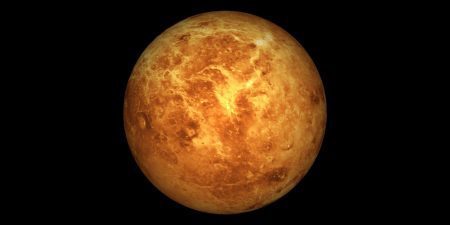
    A new study is getting close to figuring out what happened to all of Venus's water

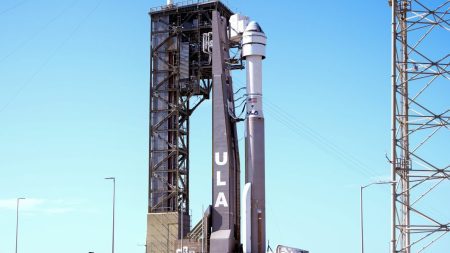
    First manned Boeing Starliner launch called off due to valve issue

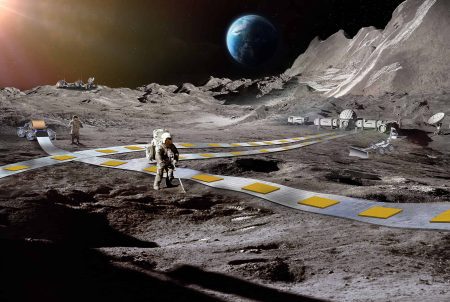
    NASA desires to construct a futuristic floating railway on the moon (and many other things)

    Add A Comment
    Leave A Reply Cancel Reply

    Must Read
    Latest Posts

    Child mental health forum to be held in Norristown

    May 13, 2024

    GameStop's stock prices surged when Roaring Kitty made a comeback on social media

    May 13, 2024

    Van Jones criticized possible Trump VP candidates for avoiding 2024 election questions, saying it's like failing kindergarten

    May 13, 2024

    Chicken fat supercapacitors may be able to store future green energy

    May 13, 2024

    Most students at prestigious universities believe that there is an issue with antisemitism, as per a survey conducted by U.S. News & World Report

    May 13, 2024
    The Plaza Journal White Logo
    X-twitter Facebook Google Pinterest Telegram

    News

    • World
    • US Politics
    • EU Politics
    • Business
    • Opinions
    • Connections
    • Science

    Company

    • Information
    • Advertising
    • Classified Ads
    • Contact Info
    • Do Not Sell Data
    • GDPR Policy
    • Media Kits

    The Plaza Journal

    • Contact Us
    • Subscription
    • Submit an Anonymous Tip
    • Newsletters
    • Sponsored News
    • Advertise With Us
    • Privacy Notice

    Keep updated

    Get the latest creative news from FooBar about art, design and business.

    Copyright © 2026 The Plaza Journal. All rights reserved.
    • Privacy Policy
    • Terms of Use
    • Cookie Policy
    • Accessibility

    Type above and press Enter to search. Press Esc to cancel.