




Close Menu
    What's Hot

    Child mental health forum to be held in Norristown

    May 13, 2024

    GameStop's stock prices surged when Roaring Kitty made a comeback on social media

    May 13, 2024

    Van Jones criticized possible Trump VP candidates for avoiding 2024 election questions, saying it's like failing kindergarten

    May 13, 2024
    Facebook X (Twitter) Instagram Telegram
    Facebook X (Twitter) Instagram
    The Plaza JournalThe Plaza Journal
    Subscribe
    Thursday, March 12
    • Sports
      • American Football
      • Basketball
      • Baseball
      • Boxing
      • Cricket
      • Football
      • Hockey
      • Tennis
    • Politics

      John Dean believes the hush money case against Trump is very strong

      May 13, 2024

      “Cruel and unfeeling” Trump assistant boasts about causing innocent homeless people to be arrested

      May 13, 2024

      Only 5 percent of people mention January 6th as the most important memory from Trump's presidency: Survey

      May 13, 2024

      7 in 10 say they’ve given a lot of thought to election: Gallup

      May 13, 2024

      Trump: ‘Hannibal Lecter is a wonderful man’

      May 13, 2024
    • Technology
    • United States
    • United Kingdom
    • Business
    • Entertainment
    • Science
      1. Archaeology
      2. Anthropology
      3. Space
      4. Biology
      5. Ecology
      6. Geology
      7. Nanotechnology
      8. Neurology
      9. Paleontology
      10. Psychology
      11. Mathematics
      12. Geography
      13. Astrophysics
      14. Oceanography
      15. Physics
      Featured

      How perspiration and endurance helped humans become excellent runners and hunters

      Biology May 13, 20244 Mins Read
      Recent

      How perspiration and endurance helped humans become excellent runners and hunters

      May 13, 2024

      Amazing photos of colorful skies around the world as auroras shine in bright colors

      May 11, 2024

      Scotland has suddenly seen a large increase in mosquitoes

      May 10, 2024
    • Health
    Facebook X (Twitter) Instagram
    The Plaza JournalThe Plaza Journal
    Home»Science

    From Earth to Mars in 39 days?

    By Myles UlwellingJuly 28, 2009 Science 3 Mins Read
    Share
    Facebook Twitter LinkedIn Pinterest Email

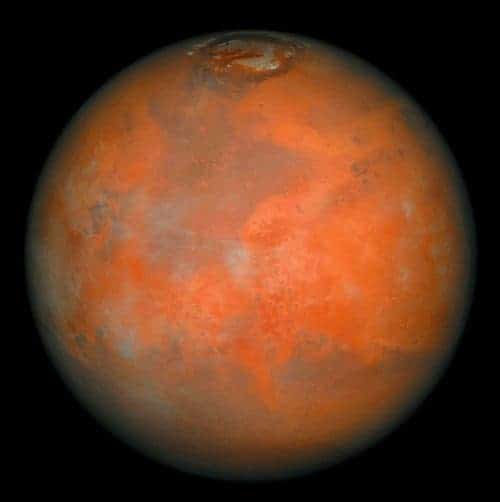
    It sounds like something pinned off a SciFi novel, but it seems like new developments in space exploration technology might make an Earth to Mars journey last as less as 39 days. The distance between Mars and Earth varies because of the different Sun revolution periods (365.25 days for Earth, and 686 days for Mars), such that at its closest, the two planets can found 100 million km apart, while at their most distant they are about 380 million km apart.

    Now, using traditional chemical fuel powered rockets (the same as the one used for the Moon landing) with would take a manned spacecraft about six months to reach Mars from Earth. However, such missions are simply undouable because of the great amounts of dangerous space radiation to which astronauts would get exposed. How about if the missions took only 39 days?

    How? By using ion engines, instead of the usual combustion engines, as presented in a recent New Scientist article.

    Traditional rockets burn chemical fuel to produce thrust. Most of that fuel is used up in the initial push off the Earth’s surface, so the rockets tend to coast most of the time they’re in space.

    Ion engines, on the other hand, accelerate electrically charged atoms, or ions, through an electric field, thereby pushing the spacecraft in the opposite direction. They provide much less thrust at a given moment than do chemical rockets, which means they can’t break free of the Earth’s gravity on their own.

    But once in space, they can give a continuous push for years, like a steady breeze at the back of a sailboat, accelerating gradually until they’re moving faster than chemical rockets.

    Ion engines aren’t a novelty though, having been used for a while now in NASA’s Dawn spacecraft, which is en route to the asteroids Vesta and CeresMovie Camera, and Japan’s spacecraft Hayabusa, which rendezvoused with the asteroid Itokawa in 2005. The new VASIMR engine, developed by Ad Astra Rocket Company, is.

    VASIMIR works by using a radio frequency generator to heat charged particles, resulting in plasma. Currently, the amount of thrust produced is very small (about a pound), but in space it’s well enough to move two tons of cargo. Running solely on solar power, VASIMIR could prove to be perfect for satellites or for use in space shuttles. Actually, Ad Astra plans to attach a solar-powered VASIMR engine to the International Space Station for tests, and, if they are successful, could use VASIMR periodically to thrust the ISS back into the Earth’s orbit.

    This sounds grand and all, but what about Mars? Well, for VASIMR to be used on manned 39 days Mars mission, it’s engine would need 1000 times the amount of power supplied by solar engined, something only nuclear power could provide. Research in developing such a technology hasn’t taken place since the early ’80s, when the soviets were looking into it, before canceling the project, and consequently it could take a great deal of time before we will see a manned Mars mission.

    The potential is enourmous though, and NASA has provided Ad Astra with a small stipend for VASIMR development.

    If engines, such as VASIMR, could be developed to take people to the Red Planet in 40 days, “that puts it inside the range of what we feel comfortable of doing with humans,” he told New Scientist. “Something like VASIMR – that’s a game changer,” sais John Muratore of the University of Tennessee Space Institute and a former lead engineer for NASA’s space shuttle programme.

    [via New Scientist]

    Mars Space exploration
    Myles Ulwelling

    Keep Reading

    How perspiration and endurance helped humans become excellent runners and hunters

    Amazing photos of colorful skies around the world as auroras shine in bright colors

    Scotland has suddenly seen a large increase in mosquitoes

    ‘Buoyant’ magma offers clues about the power of volcanoes

    Add A Comment
    Leave A Reply Cancel Reply

    Must Read
    Latest Posts

    Child mental health forum to be held in Norristown

    May 13, 2024

    GameStop's stock prices surged when Roaring Kitty made a comeback on social media

    May 13, 2024

    Van Jones criticized possible Trump VP candidates for avoiding 2024 election questions, saying it's like failing kindergarten

    May 13, 2024

    Chicken fat supercapacitors may be able to store future green energy

    May 13, 2024

    Most students at prestigious universities believe that there is an issue with antisemitism, as per a survey conducted by U.S. News & World Report

    May 13, 2024
    The Plaza Journal White Logo
    X-twitter Facebook Google Pinterest Telegram

    News

    • World
    • US Politics
    • EU Politics
    • Business
    • Opinions
    • Connections
    • Science

    Company

    • Information
    • Advertising
    • Classified Ads
    • Contact Info
    • Do Not Sell Data
    • GDPR Policy
    • Media Kits

    The Plaza Journal

    • Contact Us
    • Subscription
    • Submit an Anonymous Tip
    • Newsletters
    • Sponsored News
    • Advertise With Us
    • Privacy Notice

    Keep updated

    Get the latest creative news from FooBar about art, design and business.

    Copyright © 2026 The Plaza Journal. All rights reserved.
    • Privacy Policy
    • Terms of Use
    • Cookie Policy
    • Accessibility

    Type above and press Enter to search. Press Esc to cancel.